
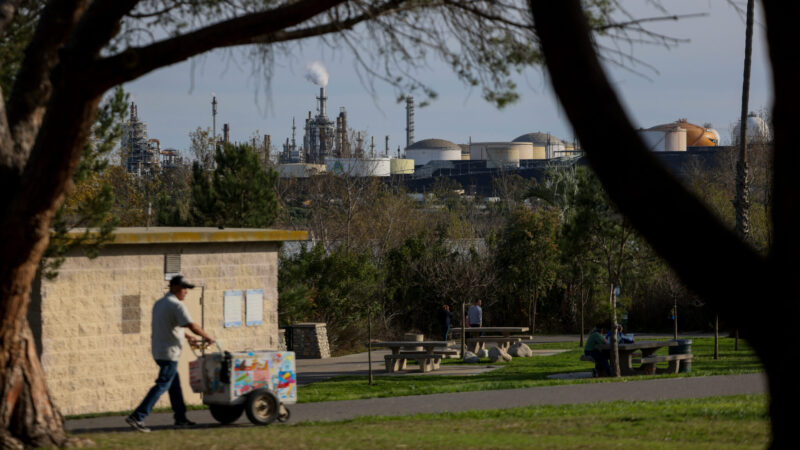
A view of the Phillips 66 Los Angeles refinery from Ken Malloy Harbor Regional Park on Feb. 16. Credit: Juliana Yamada/Los Angeles Times via Getty Images
A new report recommends that refineries write decommissioning plans like those required of other energy infrastructure, and set aside funds to carry out cleanups, before they shut down.
By Blanca Bergert
December 9, 2025
“When Morgan Gonzalez first learned, in October 2024, that the Phillips 66 refinery in Wilmington, California, would close at the end of this year, he felt a mix of emotions. For almost 100 years, Gonzalez’s family has lived in the Wilmington community near the Port of Long Beach, suffering from asthma and other respiratory issues that they attribute to truck traffic and the five refineries that surround the small neighborhood.
‘I don’t want to understate the impact that this refinery closure will have for our health,’ said Gonzalez, an advocate with the environmental justice group Communities for a Better Environment (CBE). ‘It’s a big change for the community.’
But his excitement has been largely overshadowed by concerns about how the cleanup will proceed…”